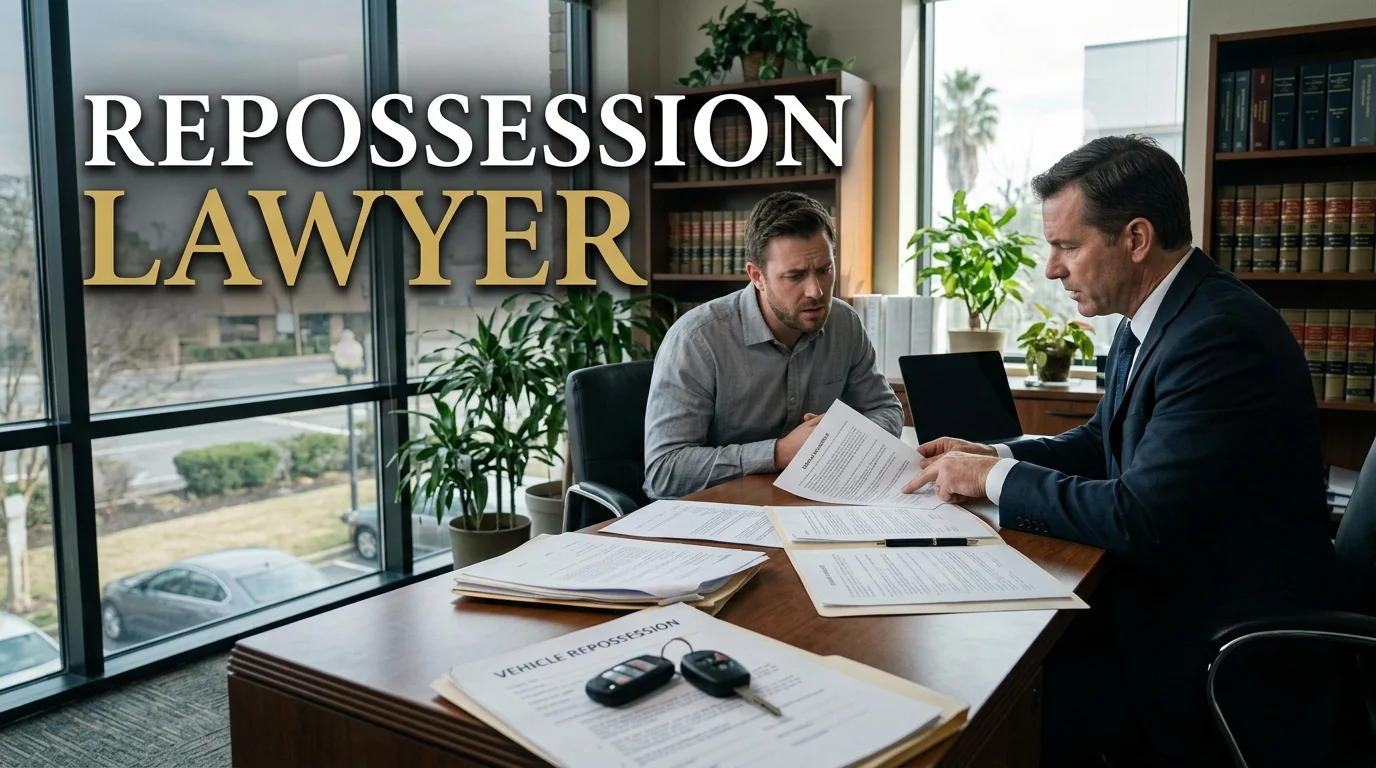
A repossession lawyer helps borrowers understand and enforce their rights when a lender takes or threatens to take secured property. These attorneys often handle vehicle repossessions, wrongful repossession claims, deficiency disputes, and lender misconduct. Legal help can become especially important when a repossession involves threats, property damage, payment errors, or improper notices. You might also like Garnishment Lawyer.
Repossession laws vary by state, so rights available in one state may differ elsewhere. Federal protections can also apply in certain circumstances. This guide explains common U.S. repossession rules and when legal advice may help.
Quick answer: A repossession lawyer reviews whether a lender or repossession company followed applicable law when taking secured property. The attorney may challenge wrongful repossession, examine notices and sale procedures, dispute deficiency claims, negotiate with lenders, or seek damages. Your specific rights depend heavily on state law and the facts surrounding the repossession.
Repossession Lawyer at a Glance
| Topic | Key Information |
|---|---|
| Main role | Reviews repossessions and protects borrower rights |
| Common cases | Vehicle repossession, wrongful repossession, deficiency disputes |
| Key legal issue | Whether the creditor followed state and federal requirements |
| Breach of peace | Nonjudicial repossession generally cannot involve a breach of peace |
| Personal property | Items inside a repossessed vehicle receive separate protections |
| After repossession | Redemption, reinstatement, auction, or deficiency issues may arise |
| When to seek help | Threats, force, payment errors, property damage, or disputed debt |
| Governing law | State law, UCC provisions, contracts, and applicable federal laws |
What Does a Repossession Lawyer Do?
A repossession attorney examines the loan agreement, payment history, lender communications, and circumstances surrounding the seizure. The lawyer can determine whether the creditor had a valid right to take the collateral. An attorney can also identify procedural problems that may create defenses or legal claims.
Legal representation may continue after the property has already been taken. A lawyer can review sale notices, auction procedures, and any remaining balance the creditor claims. This review can matter because repossession does not automatically eliminate the underlying debt.
Consumers facing broader financial problems may also need advice on debt management or bankruptcy options. Lawzoria’s debt relief attorney guide explains several legal approaches to serious debt. Those options should be evaluated against your finances and applicable state law.
When Can a Lender Repossess a Vehicle?
Many auto finance contracts give lenders a security interest in the financed vehicle. Default can permit the creditor to take possession of that collateral. Missing a required payment is a common form of default, although the contract can identify other events.
In many states, a lender may repossess a vehicle without first obtaining a court order. Advance notice is not always required either. The exact rules depend on state law, the financing agreement, and other applicable protections.
Section 9-609 of the Uniform Commercial Code permits a secured party to take possession after default. Nonjudicial repossession must occur without breaching the peace. States have adopted versions of Article 9, so consumers should still check the law that applies where they live.
How a Repossession Lawyer Can Help You
An attorney can start by determining whether a valid default existed when the vehicle was taken. Payment records can reveal mistakes, including payments that were processed incorrectly or agreements that should have stopped repossession. Written extensions, deferments, and payment arrangements can be particularly important evidence.
A lawyer can also investigate how the repossession occurred. Threats, physical force, entry into a closed garage, or property damage may raise serious legal issues. The precise meaning of a breach of peace can depend on state law and specific circumstances.
Finally, an attorney can examine what happened after the seizure. Creditors may have duties regarding notices, the disposition of collateral, personal belongings, and accounting for any remaining balance. Errors during this stage can affect a creditor’s ability to recover additional money.
Wrongful Repossession and Breach of the Peace
What Is a Wrongful Repossession?
A repossession may be wrongful if the creditor lacked a legal basis to take the vehicle or violated applicable rules. One example is taking a vehicle after a borrower made a payment that should have stopped the repossession. Another may involve repossessing the wrong vehicle or acting despite an effective loan modification.
Federal regulators have documented wrongful repossessions caused by servicing failures. The Consumer Financial Protection Bureau has reported cases involving payments, extensions, and repossession orders that were not properly canceled. These examples show why borrowers should keep payment confirmations and written communications from lenders.
A dispute does not automatically make a repossession unlawful. The contract, payment history, state statutes, and events at the scene all matter. A qualified attorney can evaluate those facts under the law governing the transaction.
What Counts as a Breach of the Peace?
UCC Article 9 allows nonjudicial repossession only when it can occur without breaching the peace. The UCC does not provide a single nationwide definition for every situation. Courts and state laws therefore play an important role in determining whether specific conduct crosses the line.
The Federal Trade Commission says a breach of peace can include force or threats in some states. Removing a vehicle from a closed garage without permission can also create legal problems. State rules may provide additional protections.
Avoid physically confronting a repossession agent, even when you believe the seizure is improper. Record what happened from a safe position and preserve evidence instead. An attorney can later determine whether the conduct supports a defense or claim.
What Should You Do After Your Car Is Repossessed?
Start by contacting the lender or loan servicer and asking why the vehicle was taken. Request information about the amount owed, the upcoming sale, and options to recover the vehicle. Keep copies of every email, letter, payment record, and notice you receive.
Next, write down exactly what happened during the repossession. Record the date, approximate time, location, witnesses, statements made, and any property damage. Photographs, security-camera footage, text messages, and payment confirmations can become useful evidence.
Also make a list of personal property left inside the vehicle. Contact the lender or repossession company promptly about retrieving those belongings. Rules for retrieving personal items vary by state, so document every request and response.
Can You Get a Repossessed Car Back?
You may have options for recovering the vehicle before it is sold. One possibility is redemption, which generally requires paying the amount required by applicable law and the agreement. The amount can include the outstanding obligation and certain repossession expenses.
Some states or contracts also permit reinstatement. Reinstatement generally involves bringing overdue payments current and satisfying other permitted requirements. This option isn’t available nationwide under the same terms.
Timing can be critical because lenders may sell repossessed vehicles after required procedures are completed. Waiting can reduce the available options. Contacting the lender promptly can help you determine the relevant deadline.
What Happens to Personal Property Inside a Repossessed Car?
Repossessing a vehicle does not normally give a creditor unlimited ownership rights to unrelated personal belongings inside it. Items such as clothing, documents, phones, and other removable possessions are distinct from the financed vehicle. State law can determine how the lender or repossession company must handle those belongings.
Create a detailed inventory as soon as possible. Include approximate values and any proof showing that important property was inside the vehicle. Written requests for the property’s return create a useful record if a dispute develops.
Deceptive conduct and other consumer practices may overlap with broader consumer-protection issues. Lawzoria’s consumer fraud lawyer guide explains how attorneys investigate consumer claims. The specific laws involved will depend on the conduct and jurisdiction.
What Is a Repossession Deficiency?

Repossession does not necessarily erase the unpaid auto loan. After taking the vehicle, a creditor may sell it and apply eligible sale proceeds to the balance. A remaining amount can become a deficiency.
For example, assume the legally calculated balance and permitted expenses total $18,000. If applicable sale proceeds reduce that obligation to $6,000, the remaining amount may be claimed as a deficiency. The actual calculation and creditor’s right to collect depend on applicable law and the facts.
A lawyer may review whether required notices were sent and whether the sale complied with governing rules. The attorney can also examine the amount claimed and available defenses. This becomes especially important when a lender files a lawsuit seeking a deficiency judgment.
Signs You Should Consider Contacting a Repossession Attorney
Some repossession disputes are more urgent than others. Legal advice can help if you have evidence that the lender or repossession company may have violated your rights. Fast action can also matter when an auction or lawsuit deadline is approaching.
Consider speaking with a licensed attorney if:
* You were current on your required payments when the vehicle was taken. * You had a written extension, deferment, or payment arrangement. * A repossession agent threatened or used physical force. * The agent damaged a locked garage, gate, or other property. * Your personal belongings are being withheld. * You believe required post-repossession notices were improper. * The lender claims a deficiency you believe is inaccurate. * You received court papers concerning the remaining debt. * You are an eligible servicemember who may have additional federal protections.
Bring organized records to the consultation whenever possible. Your loan contract, payment history, notices, photographs, and lender communications can help the attorney evaluate the dispute. Clear documentation may also reduce the time needed to understand what happened.
How Much Does a Repossession Lawyer Cost?
Attorney fees depend on the state, case complexity, services required, and the lawyer’s fee arrangement. Some consumer attorneys offer an initial consultation at no cost, while others charge a consultation fee or hourly rate. Certain consumer claims may also involve different fee structures depending on applicable law.
Ask about fees before agreeing to representation. Find out whether the lawyer charges hourly, uses a flat fee, or handles qualifying claims through another arrangement. Request a written engagement agreement explaining both legal fees and case expenses.
Cost should also be considered against the amount at stake. A disputed deficiency, vehicle value, lost property, or damages can affect whether representation makes financial sense. An attorney can explain your options but cannot guarantee a specific outcome.
Choosing a Lawyer for a Repossession Dispute
Look for an attorney licensed in your state who handles consumer law, auto finance disputes, secured transactions, or related litigation. Repossession rules vary by state, so relevant local experience can matter. Ask prospective counsel how frequently they handle disputes involving auto lenders and repossession companies.
During a consultation, describe the facts without leaving out missed payments or other unfavorable information. Accurate facts allow the lawyer to assess the creditor’s rights alongside your protections. Bring documents instead of relying entirely on memory.
Lawzoria provides general educational material, not individualized legal representation. Readers with case-specific questions should contact an appropriately licensed attorney in their jurisdiction. You can also use Lawzoria’s contact page for questions about the site’s informational content.
Repossession Lawyer FAQ
When should I contact a repossession lawyer?
Contacting a lawyer can make sense when you believe a repossession was unlawful or a lender is demanding an incorrect deficiency. Other reasons to seek advice include threats, force, property damage, payment errors, and disputed notices. You should act promptly when the vehicle has not yet been sold or litigation has started.
Can a repo agent take my car without warning?
In many states, repossession can occur after default without advance warning or a court order. State law and your contract determine the precise requirements. Special protections can also apply to certain borrowers, including qualifying servicemembers.
Can a repo agent break into my garage?
A nonjudicial repossession generally must occur without breaching the peace. Federal consumer guidance identifies removing a vehicle from a closed garage without permission as conduct that may constitute a breach in some states. The exact legal result depends on state law and the circumstances.
Can a repossession lawyer help me get my car back?
An attorney can determine whether you can redeem, reinstate, negotiate, or challenge the repossession. The available remedy depends on state law, the contract, and whether the vehicle has already been sold. No attorney can guarantee that a repossessed vehicle will be returned.
Do I still owe money after repossession?
You may still owe a deficiency after the lender sells the vehicle. The amount generally reflects the legally recoverable balance after applicable sale proceeds and permitted charges are considered. State law can affect whether and how the creditor may collect it.
Can I sue for wrongful repossession?
Legal action may be possible when a lender or repossession company violates applicable law and the facts support a claim. Possible issues include wrongful seizure, breach of peace, property damage, or certain servicing errors. A licensed attorney can determine which claims and remedies apply in your state.
Protect Your Rights After Repossession
Vehicle repossession can create problems beyond losing transportation. You may face an upcoming sale, a deficiency balance, lost personal property, or a dispute over how the vehicle was taken. Understanding the deadlines and preserving evidence can help protect your available options.
Start by gathering your contract, payment records, notices, photographs, and communications with the lender. Then check your state’s repossession rules and seek qualified legal advice when the situation warrants it. Acting promptly is especially useful when the vehicle has not yet been sold.