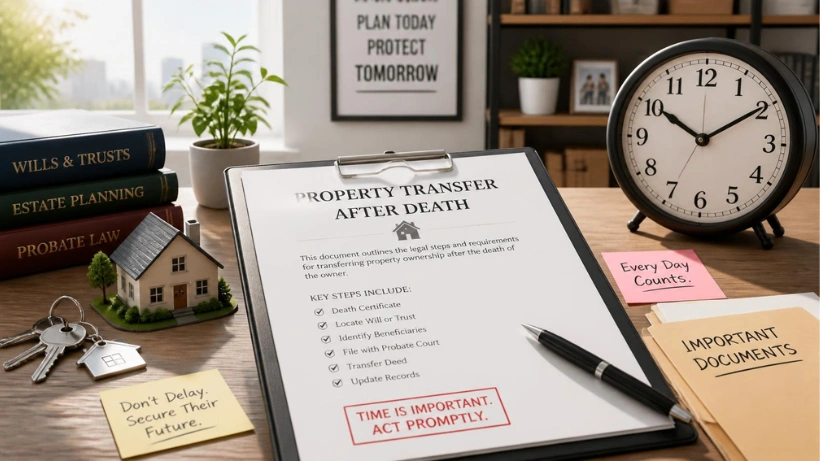
The difference between testate vs intestate comes down to whether a person dies with a valid will. If a valid will exists, it generally directs how probate assets are distributed, subject to state law and other legal limits. Without a valid will, state intestacy laws determine who receives probate property and who may administer the estate.
| Key Point | With a Valid Will | Without a Valid Will |
| Who controls distribution? | The will generally controls probate assets. | State intestacy law controls |
| Who receives property? | Beneficiaries named in the will | Heirs identified by state law |
| Estate manager | Usually the nominated executor or personal representative | Usually a court-appointed administrator or personal representative |
| Probate required? | Often, depending on the assets and state procedures | Often, depending on the assets and state procedures |
| Can the owner choose beneficiaries? | Generally yes, within legal limits. | No, default state rules apply |
| Non-probate assets affected? | Usually pass under their own transfer mechanism | Usually pass under their own transfer mechanism |
| Rules identical nationwide? | No | No |
Direct answer: Testate means a person died with a valid will, so probate generally follows that will for probate assets. “Intestate” means there is no valid will, so state succession law determines who inherits those assets. A will can also nominate an executor, while intestacy usually requires a court appointment.
Key Takeaways
- A valid will lets you give instructions for property that passes through your probate estate.
- Dying without a valid will triggers the intestacy laws of the applicable state.
- Having a will does not automatically eliminate probate.
- Beneficiary designations, survivorship rights, and some trusts may transfer property outside probate.
- A person can sometimes die partly with a valid will and partly under intestacy rules.
- State law controls will validity, inheritance shares, probate procedures, and many spousal rights.
Testate vs Intestate: The Core Difference
A testate estate exists when a person dies leaving a valid will. Cornell Law School’s Legal Information Institute defines testate succession as the distribution of property under a will, while intestate succession relies on state law. The distinction affects who receives probate property and how the deceased person’s instructions enter the probate process.
The second situation arises when someone dies without a valid will. State statutes then identify the legal heirs and determine their shares in property governed by intestacy. Although the exact order differs by state, surviving spouses and descendants commonly receive priority over more distant relatives.
Lawzoria’s How Long Do You Have to Transfer Property After Death guide provides a broader look at wills, trusts, beneficiary designations, powers of attorney, and other planning tools. These documents can work together rather than serving the same purpose. Understanding that distinction matters because a last will is only one part of many estate plans.
What Does “Dying Testate” Mean?
When someone dies testate, a valid testament provides instructions for the property it controls. A probate court may need to determine that the will is legally valid before its provisions can be carried out. Requirements for creating and proving a valid will depend on the law of the relevant state.
A will commonly identifies beneficiaries and nominates a person to administer the estate. That person is often called an executor, although state statutes may use the broader term personal representative. Court appointment can still be necessary before that person receives legal authority to manage estate property.
The will can also address matters that intestacy statutes cannot personalize in the same way. For example, a properly drafted document may nominate a guardian for minor children and determine how particular probate assets should pass. The American Bar Association notes that a will lets an individual alter the state’s default distribution plan to reflect personal preferences.
What Happens When Someone Dies Intestate?

Intestacy applies when a person dies without a valid will controlling the relevant property. The probate court then applies the state’s statutory rules of descent and distribution rather than trying to determine what the person might have wanted. Those rules can differ considerably from one jurisdiction to another.
State laws generally place relatives into an order of priority. A surviving spouse, children, or other descendants commonly appear near the top, followed in appropriate cases by parents, siblings, and more distant family members. The precise shares can change based on family structure, marital status, state law, and other circumstances.
If no qualifying relatives can be found, state law may eventually provide for the property to pass to the state. That outcome is generally called escheat. It is uncommon compared with inheritance by surviving relatives, but it illustrates why intestacy is a legal default rather than a personalized estate plan.
How Does Probate Differ With and Without a Will?
Both types of estates may require probate, so the presence of a will should not be confused with probate avoidance. Cornell’s discussion of testacy specifically notes that dying with a valid will does not itself allow beneficiaries to bypass probate court. The assets involved and their ownership structure often matter more when deciding whether a particular asset must pass through probate.
When a Valid Will Exists
The will is generally presented to the appropriate probate court, and the court determines whether it can be admitted under state law. A qualified representative can then gather estate assets, address valid debts and expenses, complete required filings, and distribute remaining probate property. The representative must follow the will together with applicable statutes and court orders.
The presence of written instructions can answer important questions about beneficiaries and the person nominated to manage the estate. It does not guarantee that probate will be fast, inexpensive, or free from disagreement. Complex assets, creditor claims, taxes, contested wills, and family disputes can affect administration regardless of whether a will exists.
When No Valid Will Exists
An interested person generally asks the probate court to open the estate and appoint someone with authority to administer it. Instead of distributing probate property according to written instructions, the representative applies the state’s intestate succession rules. Court terminology, appointment priorities, filing requirements, and timelines vary by jurisdiction.
The core administrative duties can still look similar in both situations. Estate property must generally be identified and protected, valid obligations must be addressed, and remaining property must reach the people legally entitled to receive it. The biggest distinction is the source of the distribution instructions: a valid will in one case and state statute in the other.
Who Inherits When There Is No Will?
There is no single nationwide inheritance formula for Americans who die without wills. Each state sets its own rules, and differences can become especially significant in blended families or cases involving children from different relationships. A simple statement that “the spouse gets everything” may therefore be wrong in a particular state.
Consider a person who leaves a spouse and two children. One state may give the spouse the entire intestate probate estate under a particular family arrangement, while another may divide some property between the spouse and descendants. The correct result depends on the governing state statute, so inheritance shares should be checked locally rather than assumed.
These rules also explain why unmarried partners require special attention during estate planning. An intestacy statute generally distributes property to people who meet its legal definition of an heir. A person you regard as family will not necessarily qualify for an intestate share without the legal relationship required by state law.
A Will Does Not Control Every Asset You Own
One of the most important distinctions in estate planning is the difference between probate and non-probate property. Cornell describes non-probate assets as property transferred through a survivorship mechanism, contract, trust, or another arrangement outside probate. Common examples can include life insurance with a designated beneficiary, jointly held property with survivorship rights, and assets held in certain trusts.
That means someone can die without a valid will yet still have substantial property transferred directly to named beneficiaries. The reverse is also true: someone can leave a detailed will, but beneficiary designations or survivorship arrangements may control particular assets instead. Estate planning therefore requires looking at ownership and beneficiary records as well as the will itself.
This distinction is also why creating a will should not be treated as the same thing as avoiding probate. Lawzoria’s estate-planning material discusses tools such as trusts, beneficiary designations, joint ownership arrangements, and transfer-on-death mechanisms as separate planning methods. Which options are available and appropriate depends on state law and the property involved.
Executor vs. Administrator: Who Manages the Estate?
A will often nominates an executor to handle estate administration. The probate court generally must still recognize or appoint the person before that individual can exercise formal authority. Some jurisdictions use “personal representative” as a broader label rather than relying on the executor-administrator distinction.
When there is no valid will, the court generally appoints an administrator or other personal representative under state law. The statute may give certain family members priority to serve, but eligibility and appointment rules vary. Regardless of the title, the representative has legal duties to the estate and cannot distribute property based only on personal preferences.
An estate can also have a valid will even when the nominated executor cannot serve. A successor named in the document may be available, or a court may appoint another qualified representative. For that reason, “valid will” and “named executor currently serving” are related concepts, but they are not identical.
Can Someone Die Partly Intestate?
Yes. A person may leave a valid will that fails to dispose of every part of the probate estate, creating what is commonly called partial intestacy. Cornell notes that property not disposed of through a valid will or trust can become subject to state intestate succession rules.
A residuary clause is commonly used to address property remaining after specific gifts and obligations have been handled. Without an effective provision for the residue, omitted probate property may have to pass under applicable state law. Cornell defines the residuary estate as the assets remaining after other distributions, debts, taxes, and expenses have been addressed.
This creates an important practical lesson: having a document labeled “will” does not guarantee that every probate asset will pass exactly as expected. The document must be valid, properly drafted, and suited to the person’s current property and family circumstances. Periodic review can help identify outdated beneficiary choices, missing property, or major life changes.
A Last Will Is Different From a Living Will
A last will deals primarily with matters that take effect after death. A living will addresses healthcare wishes while a person is alive but unable to communicate certain medical decisions. Confusing the two can leave important parts of an estate or incapacity plan uncovered.
Lawzoria’s guide to Product Defect Attorney explains advance directives, healthcare decision-making, and related documents in more detail. Those tools serve a different legal purpose from a last will. A broader plan may include both because death planning and incapacity planning address different events.
Which Is Better for Estate Planning?
For someone who wants to decide who receives probate assets, relying entirely on intestacy offers far less control than creating a legally valid estate plan. State default rules are designed to provide a distribution system when legally effective instructions are absent. They cannot account for every person’s relationships, priorities, charitable goals, or preferred estate manager.
A will still needs to fit with beneficiary designations, joint ownership, trusts, and other transfer methods. It should also comply with the law of the applicable jurisdiction and be reviewed after major changes such as marriage, divorce, births, deaths, or significant property changes. Estate planning is therefore better understood as coordinating several legal arrangements rather than signing one document and forgetting it.
What Should You Do Next?
The right canned sealant can make draft sealing and small gap repairs fast, clean, and effective. The result depends more on choosing the correct formulation and controlling the application than on filling the opening with as much material as possible. Treat windows, electrical areas, heat sources, water problems, and structural movement as special cases rather than routine gaps.
Before starting, read the product label and safety data, inspect what caused the opening, and protect surrounding finishes. Use professional help when the problem involves code-required assemblies, broad spray insulation, structural movement, or persistent moisture. That approach gives you a repair that solves the gap without creating a second problem.
Frequently Asked Questions
Dying testate means the person had a valid will at death, while dying without a valid will places affected probate property under intestacy law. The will normally supplies distribution instructions in the first situation, while state statutes supply them in the second. Both situations can still involve probate proceedings.
No, not automatically. A will may need to be presented in probate so a court can recognize it and authorize administration of probate assets. Property that transfers through beneficiary designations, survivorship arrangements, or certain trusts may instead pass outside the probate estate.
State intestacy law determines which heirs receive probate property and in what shares. Spouses and descendants commonly receive priority, but exact results differ by jurisdiction and family circumstances. Parents, siblings, other relatives, or eventually the state may become relevant when closer heirs do not exist.
Yes, partial intestacy can occur when a valid will fails to dispose of some property in the probate estate. The affected property may then pass under the state’s intestate succession statute. A properly drafted residuary provision can help address property that is not covered by specific gifts.
Both roles involve administering a deceased person’s estate, but the route to the position can differ. An executor is commonly nominated in a will, while an administrator is commonly appointed when no effective nomination controls. State terminology differs, and many courts or statutes use the broader term “personal representative.”