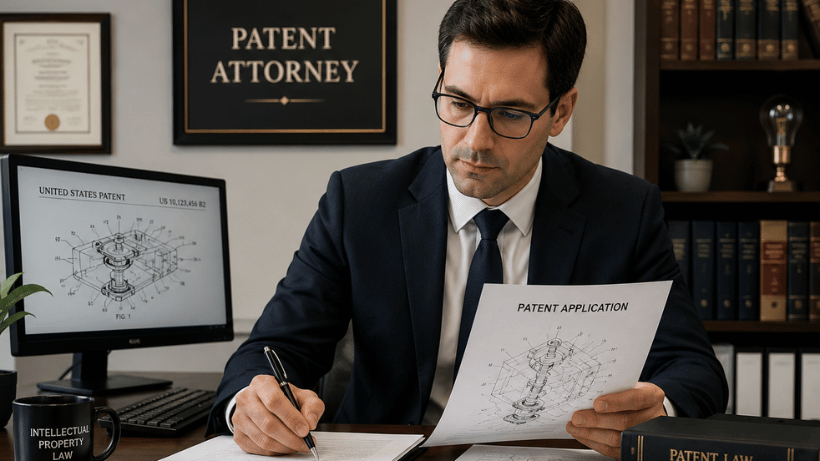
In a fast-paced, innovation-driven world, new ideas and technologies are emerging every day across the sciences, engineering, and business. However, without proper legal protection, these valuable inventions can easily be copied, misused, or stolen. To solve this challenge, the role of a patent attorney has become extremely important.
A patent attorney is a highly trained legal professional who specializes in protecting inventions through intellectual property law. They assist inventors, companies, and research organizations in securing legal rights for their innovations and ensuring that their ideas remain protected from unauthorized use.
By combining legal expertise with technical knowledge, patent attorneys play a key role in transforming ideas into legally recognized and protected assets.
| Section | Key Points |
| What Is a Patent Attorney? | A legal expert registered with the USPTO who combines law with science/engineering knowledge to protect inventions. |
| Key Responsibilities | Drafting patent applications, filing patents, searching prior art, legal representation, patent prosecution, and IP strategy development. |
| Patent Services | Includes preparing detailed technical documents, filing with patent offices, and ensuring inventions meet legal requirements. |
| Skills Required | Strong technical knowledge (engineering, biotech, CS, physics) and legal expertise (IP law, contracts, litigation). |
| Patents Attorney vs Patent Agent | Attorneys can represent clients in court and handle legal disputes; agents can only file patents, not handle litigation. |
| Importance | Protects innovation, prevents infringement, supports businesses, and encourages research and development. |
| Industries | Technology, pharmaceuticals, automotive, aerospace, manufacturing, and startups. |
| Career & Salary | High-paying career with roles from junior attorney to IP director or law firm partner. |
| Challenges | Complex documentation, changing laws, long approval processes, and high responsibility. |
What Is a Patent Attorney?

A patent attorney is a lawyer who is qualified to practice law and is also registered to represent clients before the United States Patent and Trademark Office (USPTO) or similar intellectual property offices in other countries. Unlike general lawyers, patent attorneys have a strong background in science, engineering, or technology along with legal training. We cover this in more depth in Will Attorney.
This combination allows them to understand complex inventions and translate them into legally protected patents. It also enables them to bridge the gap between technical innovation and legal requirements, ensuring that every detail of an invention is accurately described, properly structured, and fully protected under intellectual property law.
Key Responsibilities of a Patent Attorney
Patent Attorney Services Explained
Patents provide a range of essential services that help inventors and companies protect their intellectual property. Each step in the process is crucial to ensuring that an invention is properly secured under patent law and can stand against legal challenges.
Patent Application Drafting
They prepare detailed patent applications that describe how an invention works, including technical specifications, diagrams, and legal claims. This step is highly technical and requires precision, as even small errors can weaken the protection or lead to rejection by the patent office.
Patent Filing
They file applications with patent offices, such as the United States Patent and Trademark Office, or with international organizations, such as the World Intellectual Property Organization. Proper filing ensures that the invention is officially recorded and begins the legal process of protection.
Patent Search and Analysis

Before filing, they conduct prior art searches to ensure the invention is new and not already patented. This analysis helps identify existing technologies, reduces the risk of rejection, and strengthens the application by clearly highlighting what makes the invention unique and innovative.
Legal Representation
Patent attorneys represent clients in legal disputes involving patent infringement or invalidation cases. In these situations, they protect the rights of inventors or companies by presenting strong legal arguments, analyzing technical evidence, and defending or challenging a patent’s validity in court or before intellectual property tribunals.
Patent Prosecution
This process involves direct communication with patent examiners at organizations such as the United States Patent and Trademark Office. Attorneys respond to objections, clarify technical details, and modify claims when necessary to meet legal requirements. The goal of patent prosecution is to successfully obtain patent approval while ensuring the invention is fully protected.
Intellectual Property Strategy
Patents help companies build strong intellectual property portfolios and develop long-term innovation strategies. This includes deciding which inventions to patent, how to structure protection across different markets, and how to maximize the commercial value of intellectual property assets.
Skills Required to Become a Patent Attorney
Technical Knowledge
Most patent attorneys have degrees in fields such as the following:
- Engineering (mechanical, electrical, chemical)
- Computer science
- Biotechnology
- Physics
Legal Expertise
They must understand:
- Intellectual property law
- Contract law
- Litigation procedures
Difference Between a Patent Attorney and a Patent Agent

| Feature | Patent Attorney | Patent Agent |
| Legal degree | Required | Not required |
| Can represent in court | Yes | No |
| Can file patents | Yes | Yes |
| Bar exam required | Yes | No |
| USPTO registration | Yes | Yes |
Why Are Patent Attorneys Important?
Importance of Patents Attorneys
Patent attorneys play a vital role in strengthening innovation, protecting intellectual property, and supporting economic growth. Their work goes beyond legal paperwork, as they actively help shape a secure environment for inventors and businesses to grow.
Protecting Innovation
They ensure inventors receive legal ownership of their ideas. By securing patents, they ensure that original inventions are officially recognized and protected under intellectual property law, granting inventors exclusive rights to their creations.
Preventing Infringement
They help stop competitors from copying patented inventions. Through legal action, monitoring, and enforcement strategies, they protect clients’ innovations against unauthorized use and maintain the value of their intellectual property.
Supporting Businesses
Companies rely on patents to gain a competitive advantage in technology markets. assist organizations in building strong patent portfolios that increase market position, attract investors, and strengthen brand credibility.
Encouraging Research and Development
Strong patent protection encourages innovation by rewarding inventors. When inventors know their ideas are legally protected, they are more motivated to invest time, effort, and resources into research and development, leading to new technologies and advancements.
Industries That Hire Patent Attorneys
- Technology and software companies
- Pharmaceutical and biotech firms
- Automotive and aerospace industries
- Manufacturing and industrial design
- Startups and innovation hubs
Career Opportunities and Salary
- Entry-level roles: IP associate or junior patents attorney
- Mid-level: Senior patents attorney or IP counsel
- Advanced roles: Head of IP, partner in law firm, or corporate legal director
Salaries vary by country, experience, and industry but are generally significantly above average legal salaries.
Challenges Faced by Patent Attorneys

While the career is rewarding, it also comes with challenges:
- Complex and highly technical documentation
- Constant updates in patent laws
- Long examination processes
- High responsibility in protecting valuable inventions
Conclusion
Patent attorneys are essential contributors to the modern innovation and technology ecosystem. Their work goes far beyond legal documentation; they actively safeguard creativity, support scientific progress, and strengthen the economic value of inventions. By guiding inventors through patent drafting, filing, examination, and legal disputes, they ensure that new ideas are properly protected under the law.
This protection not only benefits individual inventors but also encourages businesses to invest in research and development, leading to continuous technological advancement. Overall, it serves as a critical bridge between innovation and law, ensuring that creativity is rewarded, intellectual property is secured, and industries continue to grow in a competitive global market.
If you want to read an interesting article about it, explore our Business Law category.
FAQs
A patent attorney helps inventors and companies protect their inventions by preparing, filing, and managing patent applications. They also provide legal support in patent disputes and infringement cases.
In contrast, a patent agent can only prepare and file patent applications but cannot handle litigation.
To become a patent agent, a person typically needs a degree in science or engineering, a law degree, and to pass the bar exam and the patent registration exam (such as the USPTO exam in the United States).
Patents help businesses protect their innovations, prevent competitors from copying ideas, build strong intellectual property portfolios, and maintain a competitive advantage in the market.
Attorneys work in many industries, including technology, software, pharmaceuticals, biotechnology, automotive, aerospace, manufacturing, and startups focused on innovation.