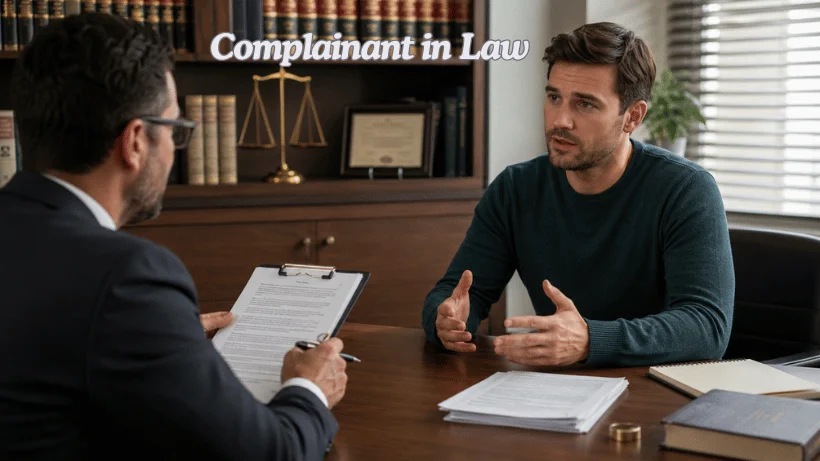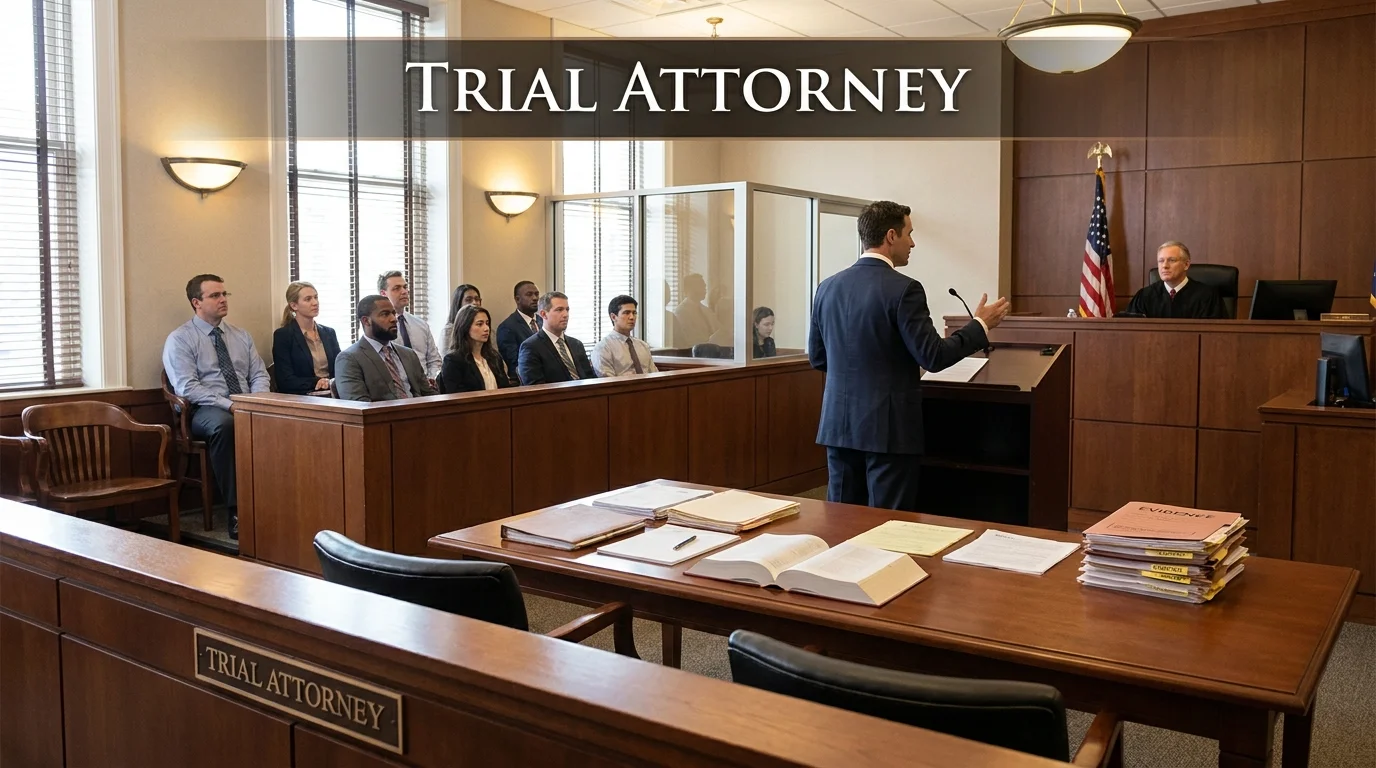
A trial attorney represents clients in disputes that may need to be decided by a judge or jury. Their work goes far beyond speaking in court. They investigate facts, develop legal arguments, handle discovery, negotiate settlements, prepare witnesses, file motions, and present evidence when a case reaches trial.
If your dispute involves serious financial, personal, property, or criminal consequences, courtroom experience can become an important factor when choosing legal counsel. In federal civil cases, discovery, motions, settlement efforts, and trial preparation can all occur before a case reaches a verdict. For a closer look at this, see What They Do.
| Key Question | Short Answer |
|---|---|
| Main role | Prepare and present disputed legal matters |
| Where they work | State courts, federal courts, agencies, and private practice |
| Common cases | Civil disputes, injury claims, criminal cases, business conflicts, property disputes |
| Pretrial work | Investigation, pleadings, discovery, motions, negotiation |
| Courtroom work | Jury selection, witness examination, objections, arguments |
| Typical fees | Hourly, flat, contingency, or another agreed structure |
| Key hiring factor | Relevant case and courtroom experience |
| Does every case go to trial? | No. Many disputes resolve before trial. |
What Does a Trial Attorney Do?
Most courtroom lawyers spend substantial time preparing before anyone enters a courtroom.
A lawyer may interview witnesses, review records, research the law, work with experts, assess evidence, draft pleadings, take or defend depositions, and negotiate with opposing counsel. Current U.S. Department of Justice job descriptions for courtroom lawyers include conducting investigations, handling discovery, drafting motions, negotiating, mediating, handling casework, and conducting trials.
Discovery can be especially important in civil litigation. Federal Rule of Civil Procedure 26 covers disclosures and the exchange of relevant, nonprivileged information. Discovery may involve documents, electronically stored information, witness details, expert disclosures, and other evidence tied to a claim or defense.
When a case reaches a jury trial, the attorney may participate in voir dire, question witnesses, challenge evidence, make objections, and deliver opening and closing arguments. U.S. Courts explains that judges and attorneys question prospective jurors during voir dire to assess whether they can serve fairly.
Trial Lawyer vs. Litigation Attorney: Is There a Difference?
The terms often overlap. Both may handle lawsuits, evidence, negotiations, motions, discovery, and court proceedings.
A litigation attorney may focus heavily on managing a lawsuit from filing through settlement or judgment. A trial lawyer places particular emphasis on presenting cases before judges and juries.
That distinction isn’t absolute. A skilled litigator may have extensive courtroom experience, while another may resolve most matters through motions or settlements. Instead of relying on a job title, ask what the lawyer has done in cases similar to yours.
If your dispute concerns property, Lawzoria’s real estate litigation attorney guide explains how litigation may progress through negotiation, discovery, mediation, arbitration, and court proceedings.
When Might You Need Courtroom-Focused Counsel?
You may want an experienced courtroom advocate when the opposing side disputes important facts, settlement talks have stalled, or the consequences of losing are substantial.
The need can arise in civil or criminal matters. Examples include serious injury claims, contract disputes, business conflicts, property litigation, criminal prosecutions, employment disputes, and other contested cases.
The type of lawyer matters as much as courtroom experience. Someone facing a driving-related charge, for example, may benefit from counsel who regularly handles that specific court and offense. Lawzoria has separate resources covering traffic court representation, DWI attorney, and court defense.
Hiring litigation counsel also doesn’t guarantee that your dispute will reach a verdict. Federal courts encourage settlement and alternative dispute resolution in civil matters, and cases can be resolved before trial.
What Happens as a Case Moves Toward Trial?

The exact process depends on the jurisdiction, type of case, court rules, and facts. State and federal procedures can differ.
In a typical federal civil lawsuit, the plaintiff begins by filing a complaint and serving the defendant. The parties may then exchange information through discovery. Lawyers can file motions asking the court to rule on legal or procedural issues. Settlement discussions may continue during this period.
If the dispute remains unresolved, the court can schedule a trial. In a jury trial, the court first selects jurors. The parties then present evidence and testimony under applicable rules of evidence and procedure. Attorneys may question witnesses and object when they believe evidence or testimony shouldn’t be admitted.
After the evidence closes, each side can make a closing argument. The judge instructs the jury on the applicable law, while jurors decide factual questions based on admitted evidence. In a bench trial, the judge decides the case without a jury.
How Much Does Hiring One Cost?
There is no reliable single U.S. price for courtroom representation. Legal fees depend on the practice area, location, complexity, the lawyer’s experience, the amount of work required, and the fee agreement.
Common arrangements include hourly billing, flat fees, contingency fees, and combinations of different methods. Cornell’s Legal Information Institute identifies these as common forms of attorney compensation.
Contingency arrangements require extra attention. Under ABA Model Rule 1.5, qualifying contingency agreements should be in writing and explain how the fee and expenses are calculated. The model rule prohibits contingency fees for representing criminal defendants and restricts them in certain domestic-relations matters. State ethics rules and applicable law govern the actual arrangement in your jurisdiction.
Before signing an agreement, ask what legal services are included, whether the fee changes if the matter proceeds to trial or appeal, and which expenses remain your responsibility.
How to Choose a Trial Attorney for Your Case
A polished website or impressive job title doesn’t show how a lawyer will handle your dispute. Focus on relevant experience, communication, preparation, and the terms of representation.
Questions worth asking include:
- How often have you handled cases involving issues like mine?
- How much of your practice involves contested hearings or trials?
- Who will handle my case day-to-day?
- What strengths and weaknesses do you see in my position?
- What alternatives to trial should we consider?
- How are attorney fees and litigation expenses calculated?
- How will you keep me informed about deadlines and major decisions?
The American Bar Association advises prospective clients to ask about a lawyer’s experience, areas of practice, who else may work on the case, fees, and possible outcomes.
You should also verify that the lawyer is licensed and in good standing in the relevant jurisdiction. For specialized matters, ask how much of their recent work involved your type of dispute rather than relying only on years in practice.
Lawzoria’s Find a Lawyer resources provide additional guidance for evaluating legal professionals across different practice areas.
What Should You Expect From Your Lawyer?
Good legal representation should include candid communication about the case, deadlines, costs, options, and risk. No lawyer can guarantee a verdict.
Your attorney should explain the strategy in language you understand and identify decisions that require your input. You should know who is responsible for the file and how to reach the legal team when important questions arise.
Preparation matters even when settlement remains the preferred outcome. Building the case carefully gives counsel the information needed to evaluate settlement offers and proceed to court if negotiations fail.
Choosing Your Next Step
Legal disputes can change quickly, and filing deadlines vary by jurisdiction and claim type. If a matter could affect your freedom, finances, business, family, or property rights, consider speaking with a licensed lawyer who practices in the relevant state and area of law.
Prepare your documents and write down your questions before the consultation. Then compare experience, communication style, strategy, and fees before deciding who should represent you.
Frequently Asked Questions
Ask about recent experience handling cases similar to yours and what happened when those disputes couldn’t be settled. That answer can reveal more than a general claim of “courtroom experience.”
Fees vary widely. A lawyer may charge hourly, use a flat fee, work under an eligible contingency agreement, or use another lawful arrangement. Ask for the fee structure and responsibility for expenses in writing before representation begins.
They can work in criminal defense, prosecution, personal injury, business litigation, employment disputes, property cases, family matters, consumer claims, and other areas. Attorneys often concentrate their practices, so relevant subject-matter experience matters.
No. Many cases resolve through settlement, mediation, plea negotiations, motions, or other procedures. Hiring a lawyer with courtroom experience means you have counsel prepared to proceed if a negotiated resolution isn’t appropriate.
A trial attorney is a lawyer who represents clients in contested legal matters and is prepared to present evidence and arguments before a judge or jury. Their duties often include investigation, discovery, motions, negotiations, witness preparation, and courtroom advocacy.